The Steading at Dusk
A lone sorcerer, two hill giants, and a gate that should never have opened. This is one evening at a Realms Unbound table: sign in, set up a campaign on an official module, bring a 9th-level character, and play the gate of Steading of the Hill Giant Chief until somebody falls. Every picture below was taken from the game while it ran. Every line of narration in them is the Dungeon Master's own.
How to read this
The Dungeon Master is a model; the rules are an engine. The model narrates and decides what the world does. The engine rolls every die, does every sum, and keeps every hit point, and wherever a rule is stated the book and page are printed beside it in gold. Numbers on screen open into the parts they were added up from.
Pins on a picture are numbered, and the notes under it say what each one points at. Where the pictures were placed, the game placed them. Nothing was painted over.
The front door
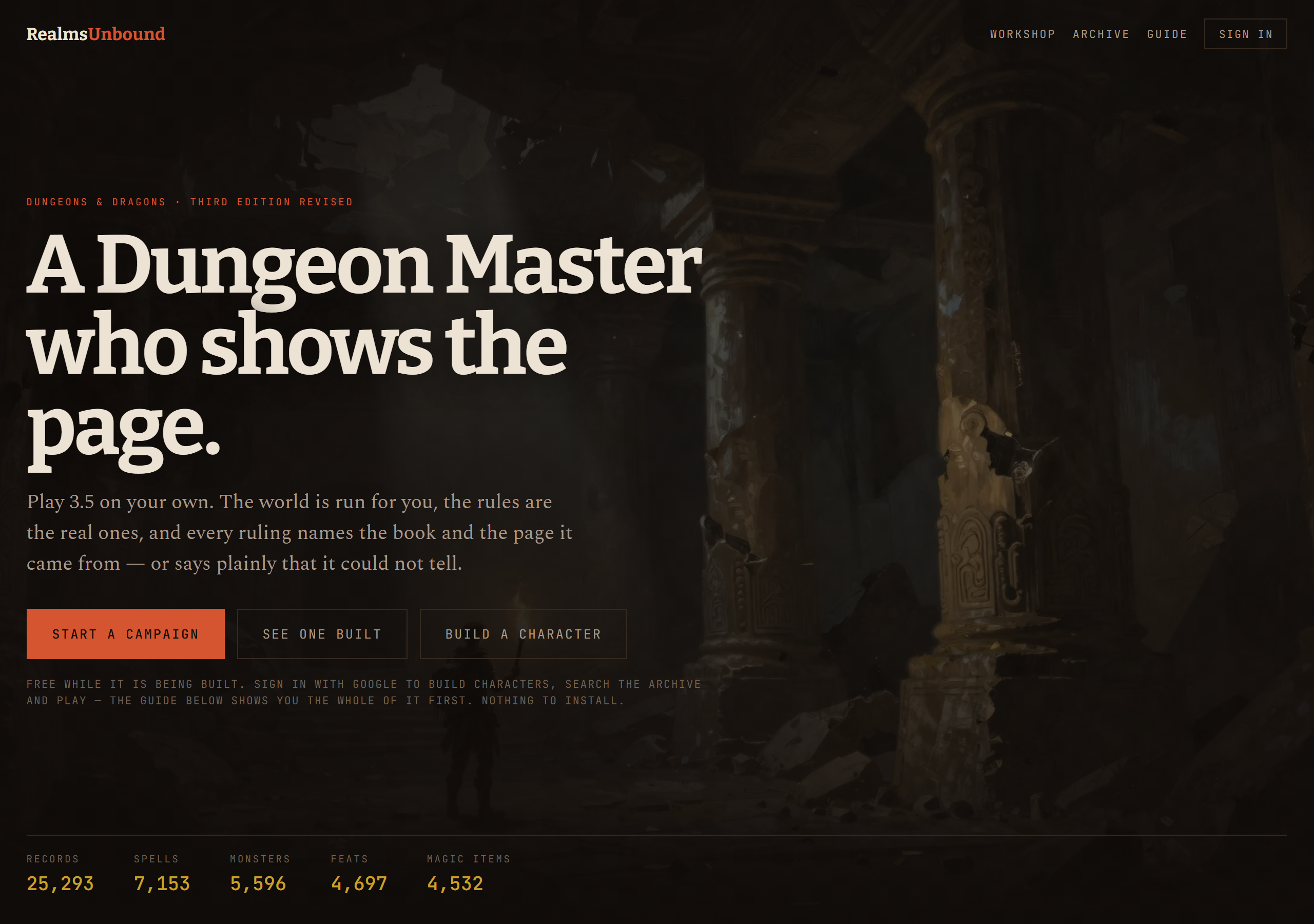
The front page is the only page you can read without an account. Start a campaign signs you in with Google; Realms Unbound never sees a password. The strip along the bottom counts the rules archive the Dungeon Master reads from, live.
Asked once, then your own keys
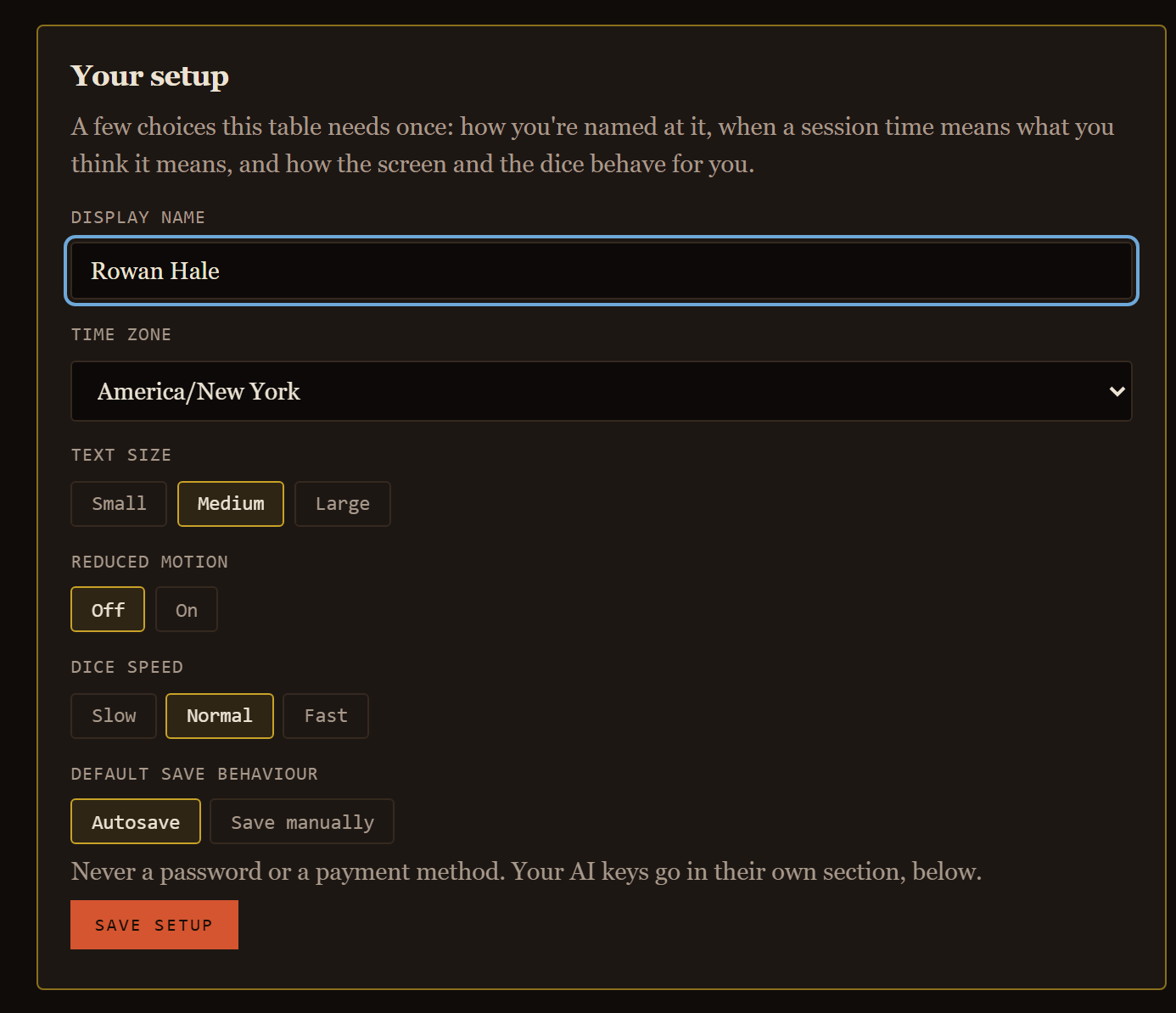
The first time you arrive you get one screen of settings: the name the table calls you, how the dice fly, and whether every turn saves itself.
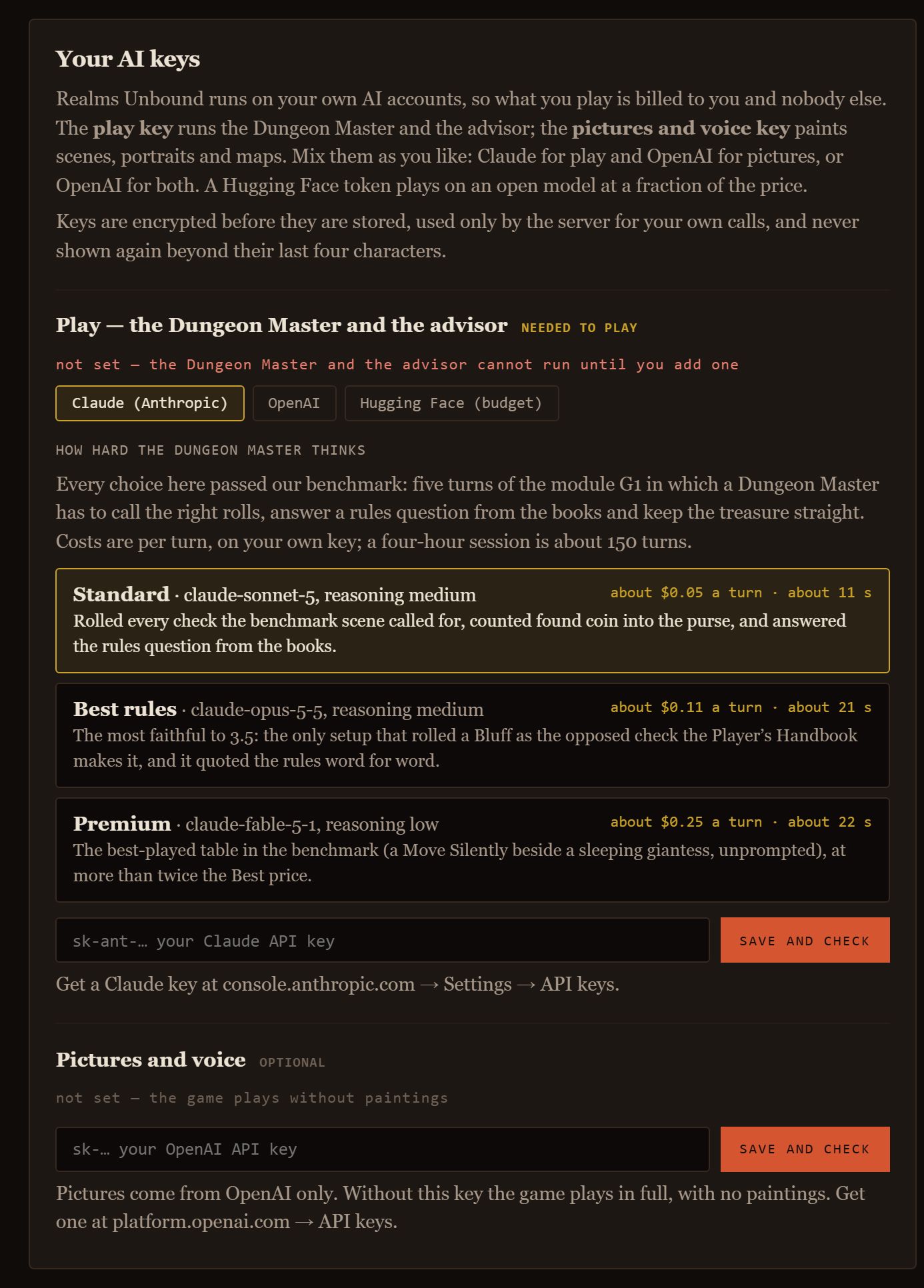
Below that, your own AI keys. Realms Unbound runs on your accounts, so what you play is billed to you and nobody else. A play key runs the Dungeon Master and the advisor: Claude or OpenAI, your choice. It is the one thing the table cannot run without. A pictures and voice key (OpenAI) is optional. Without it the game plays in full, with no paintings.
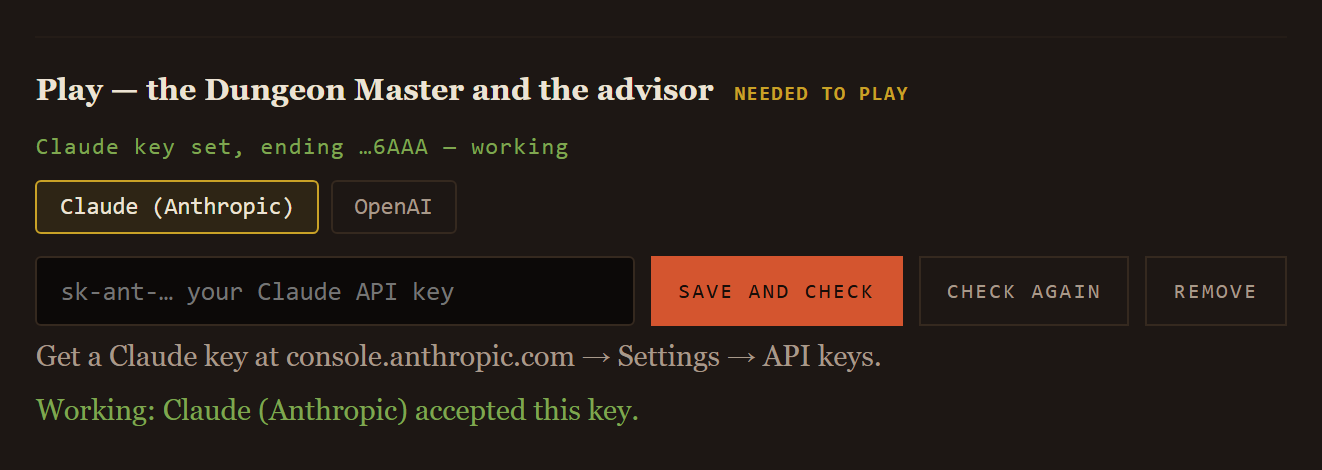
Save and check stores the key encrypted and tries it straight away, with one tiny call. The answer comes back in words: working, or why not and where to get one.
An official module, run room by room
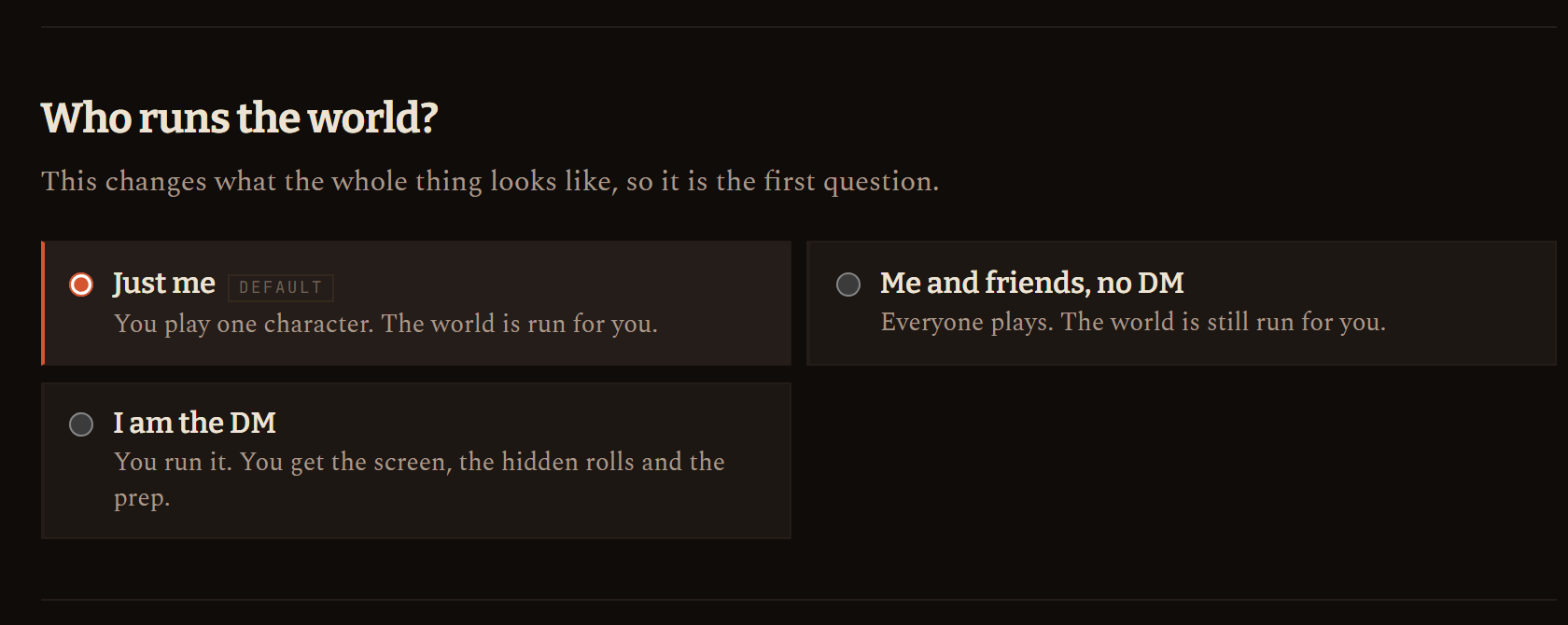
A new campaign starts with one question: do you want the world run for you, or do you run it? Kestrel's table is run for him.
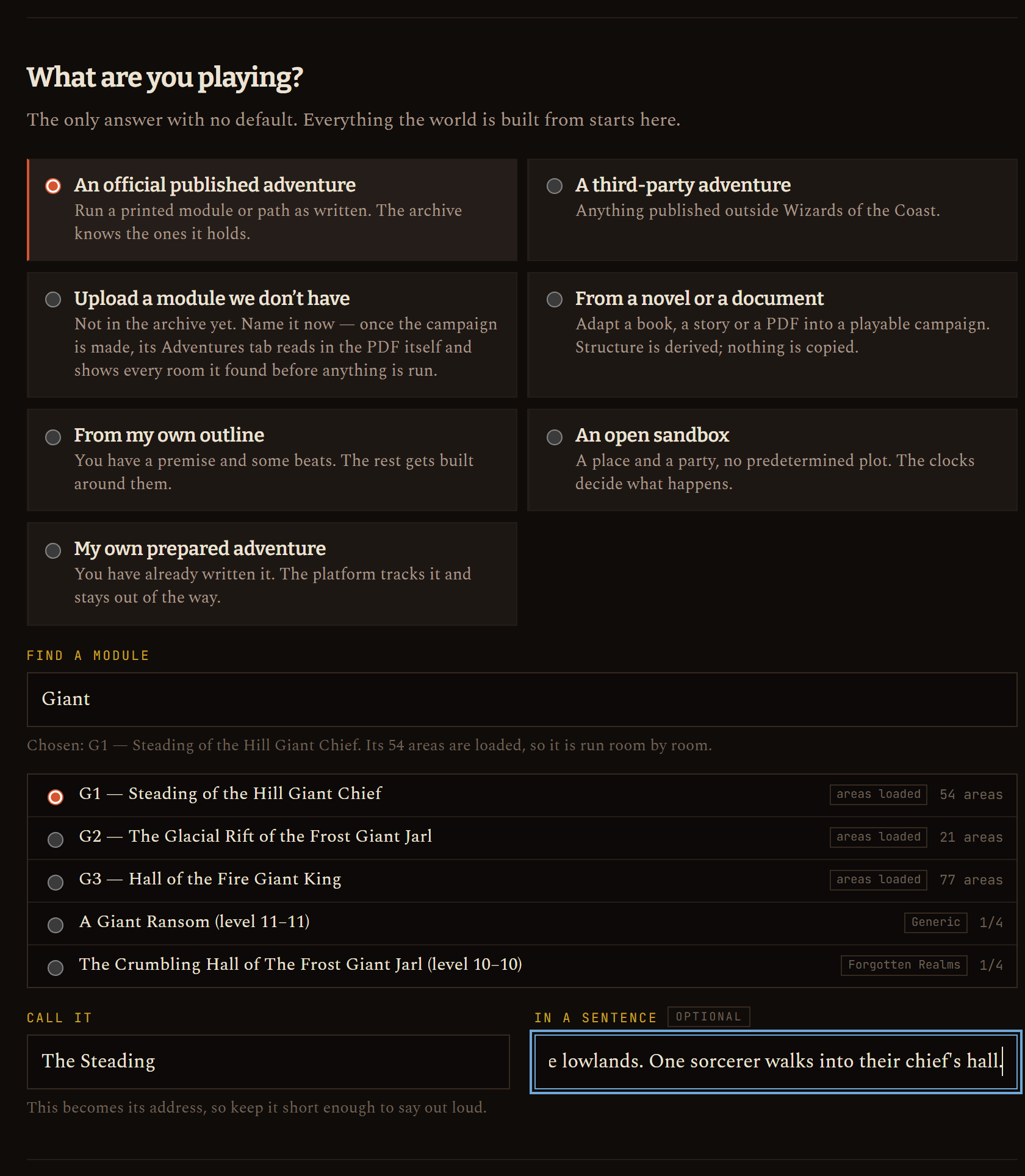
Then the adventure. G1, Steading of the Hill Giant Chief, is loaded as 54 areas, so the Dungeon Master runs it from the module's own text, one room at a time, instead of from memory.
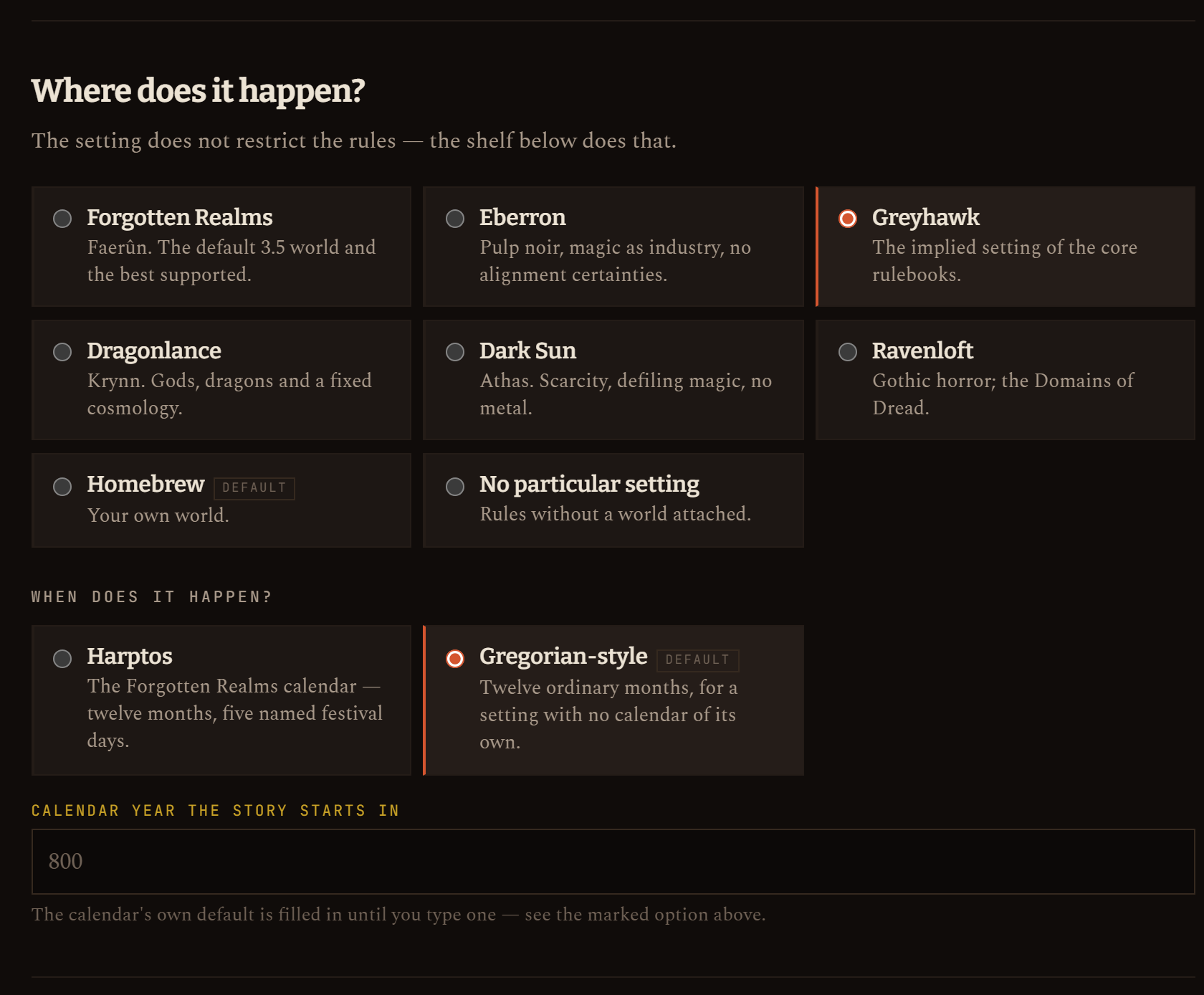
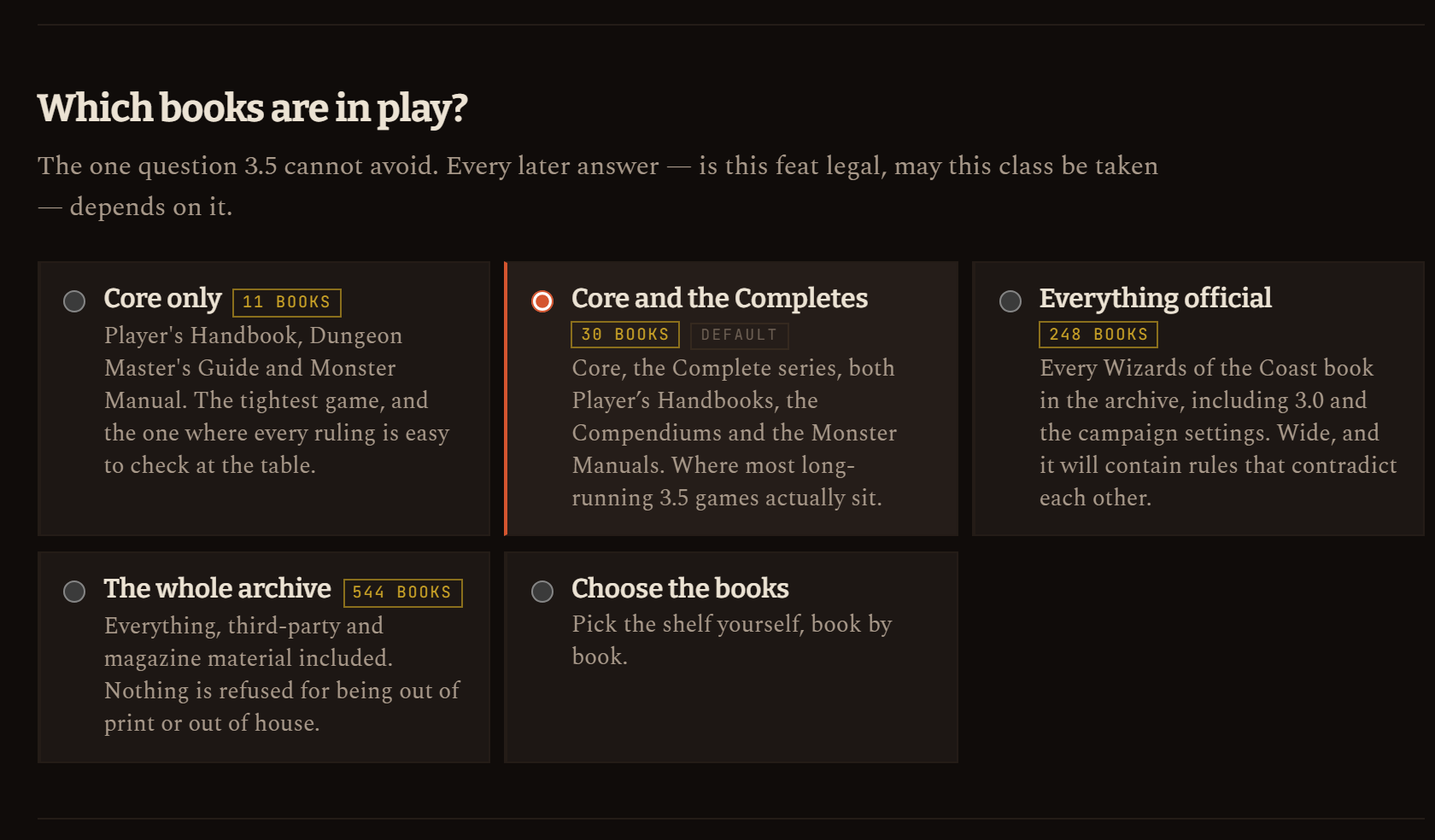
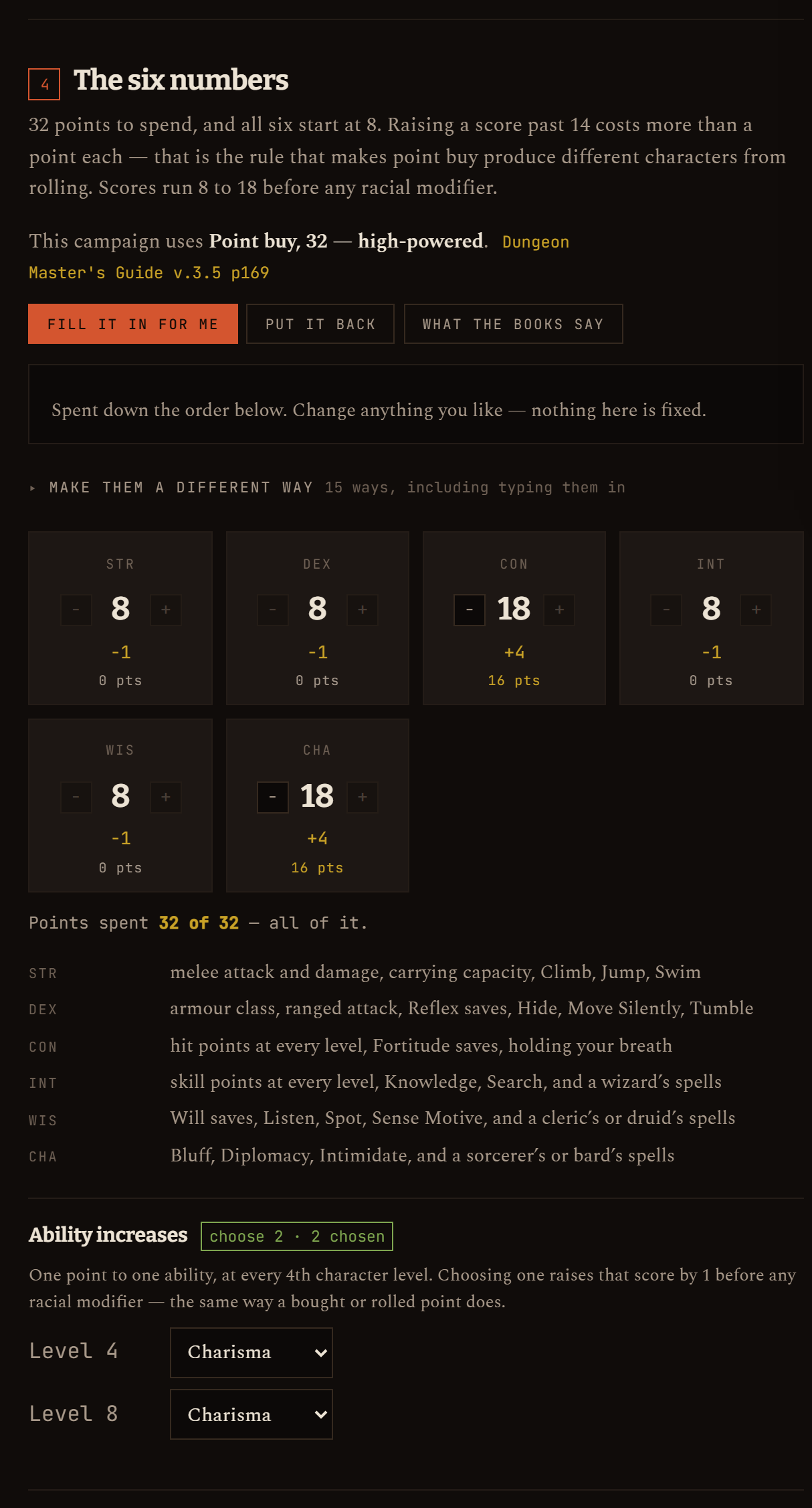
Characters start at 9th level, from a 32-point buy. A character made above 1st level needs an experience total, and the Dungeon Master's Guide leaves that to the Dungeon Master DMG p199. This table set 43,700, near the top of 9th. The game writes it on the character's ledger when they sit down.
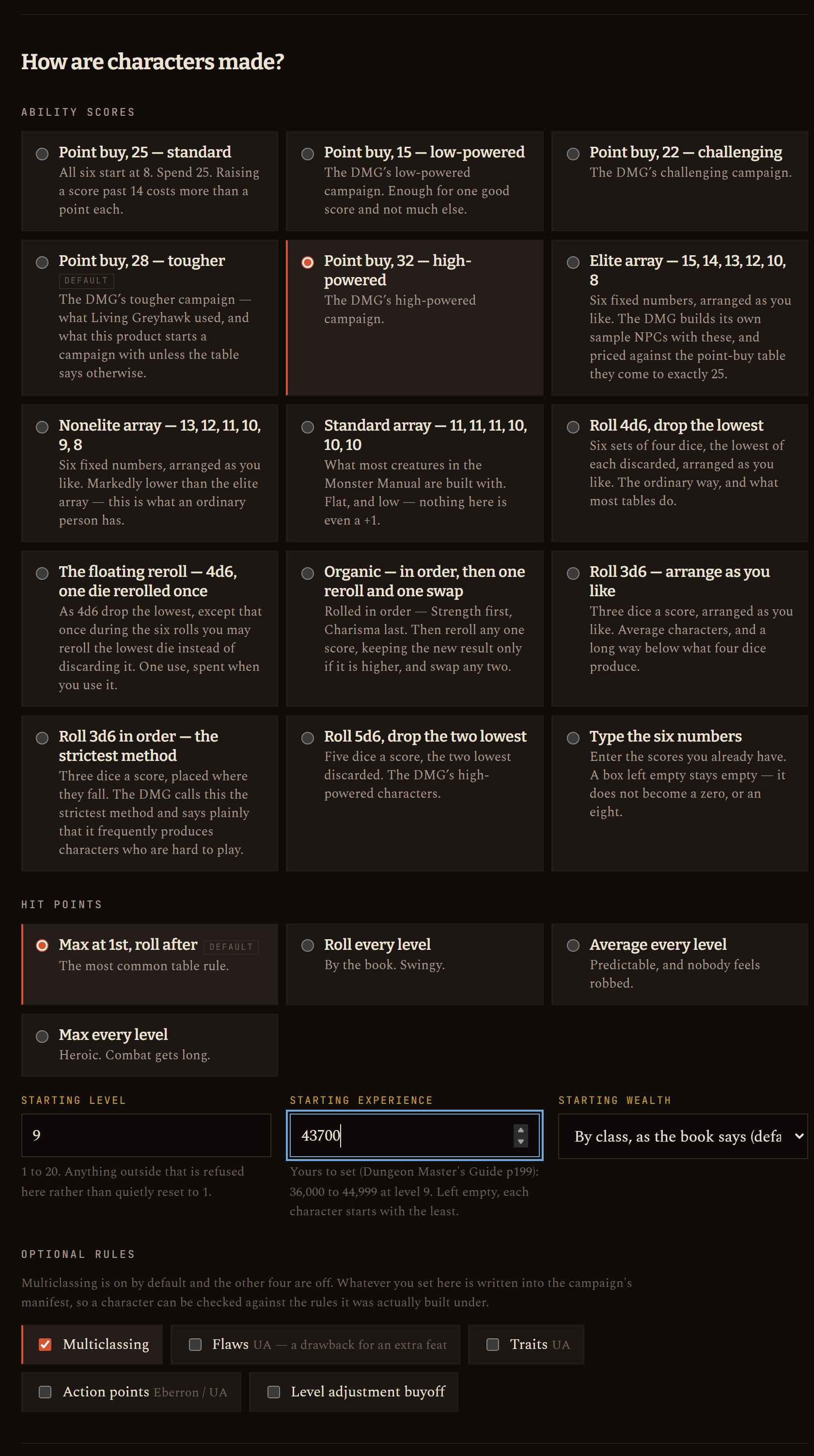
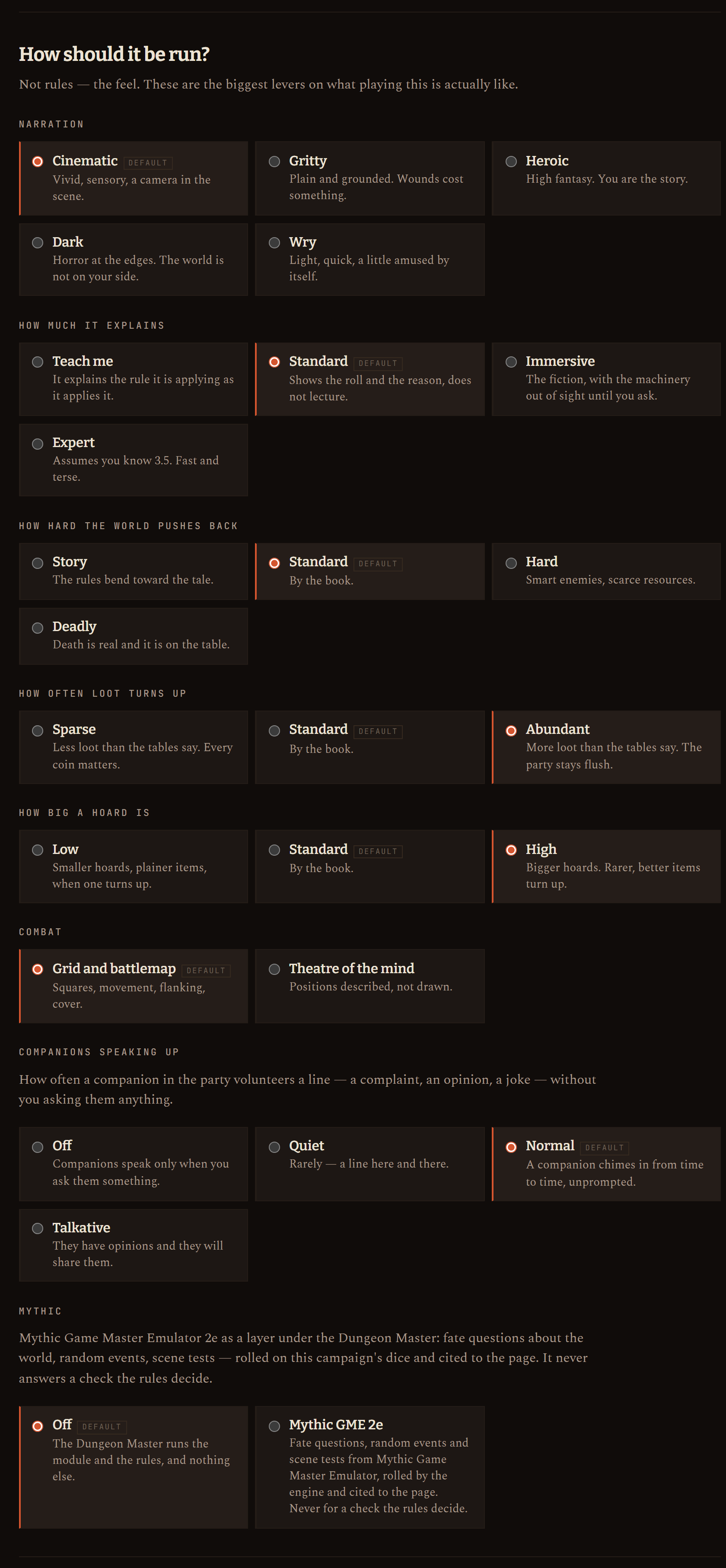
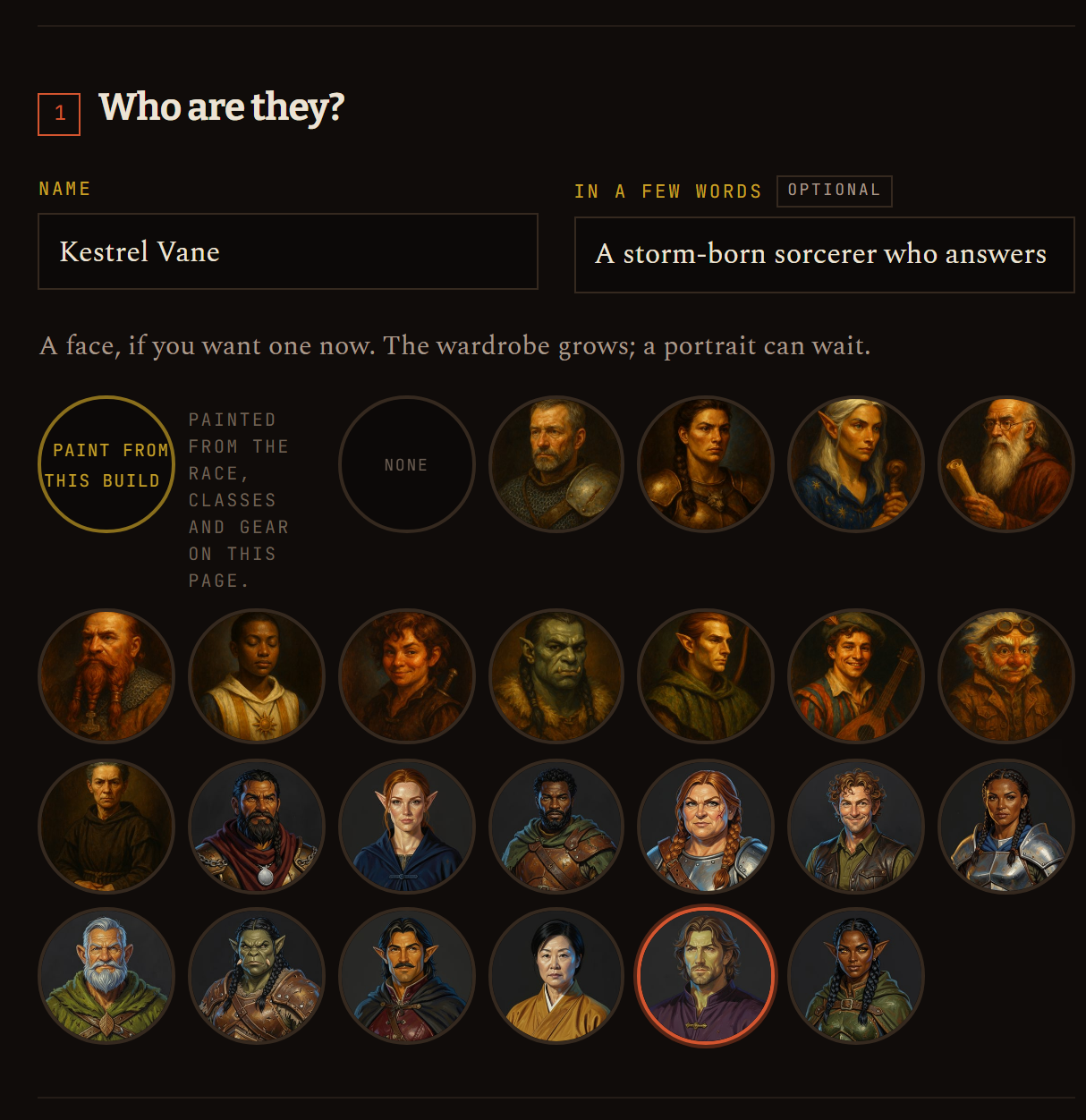
A 9th-level sorcerer, in a few presses
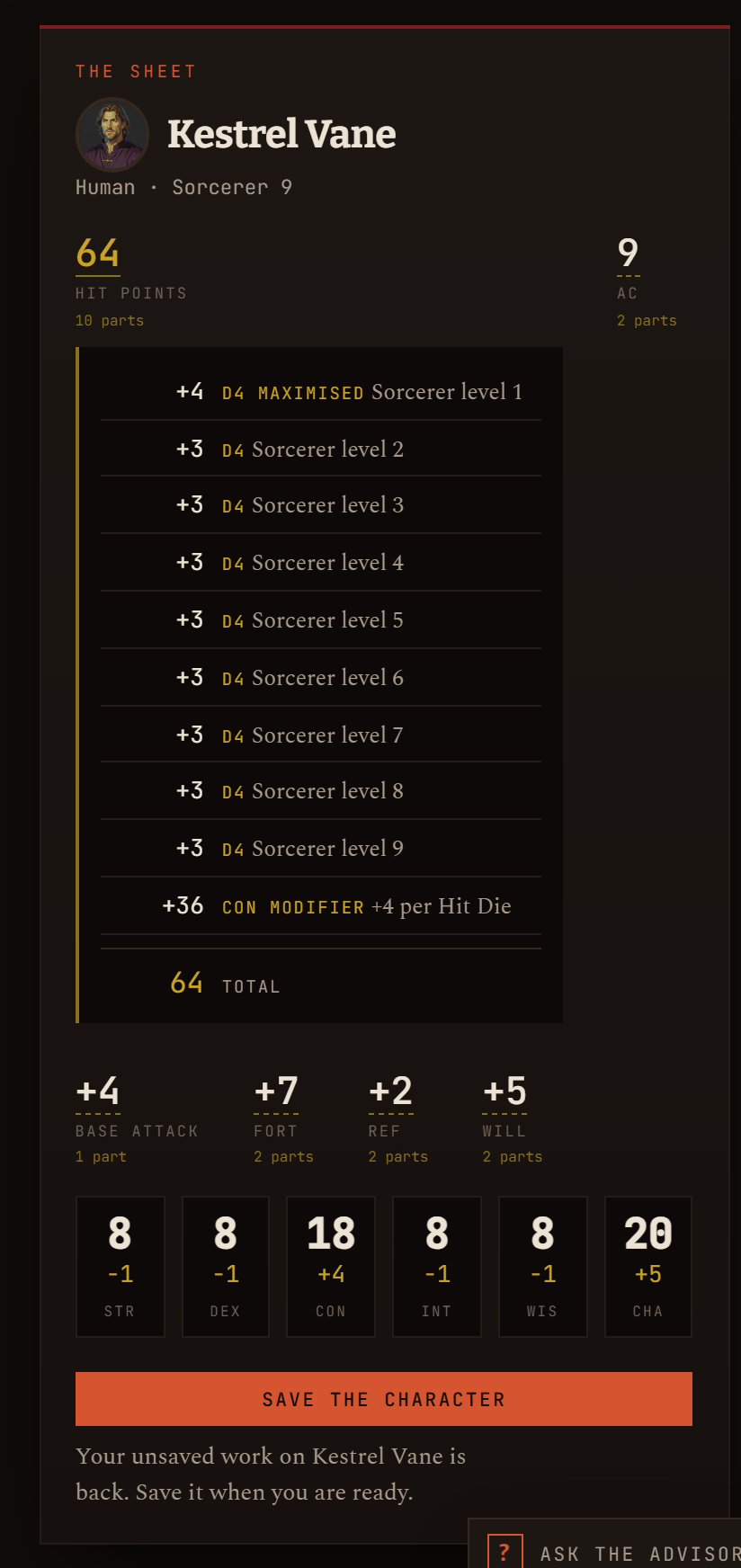
The workshop builds a character a step at a time, and every step has a Fill button that reads your concept and makes the choices for you. Kestrel Vane is a courtier with a silver tongue and a great deal of fire. He took about as long to make as it takes to read this paragraph. The full workshop guide builds a twentieth-level character one choice at a time.

Every number opens. Press Kestrel's hit points and they come apart into the ten pieces they were added up from.
Dusk at the Steading
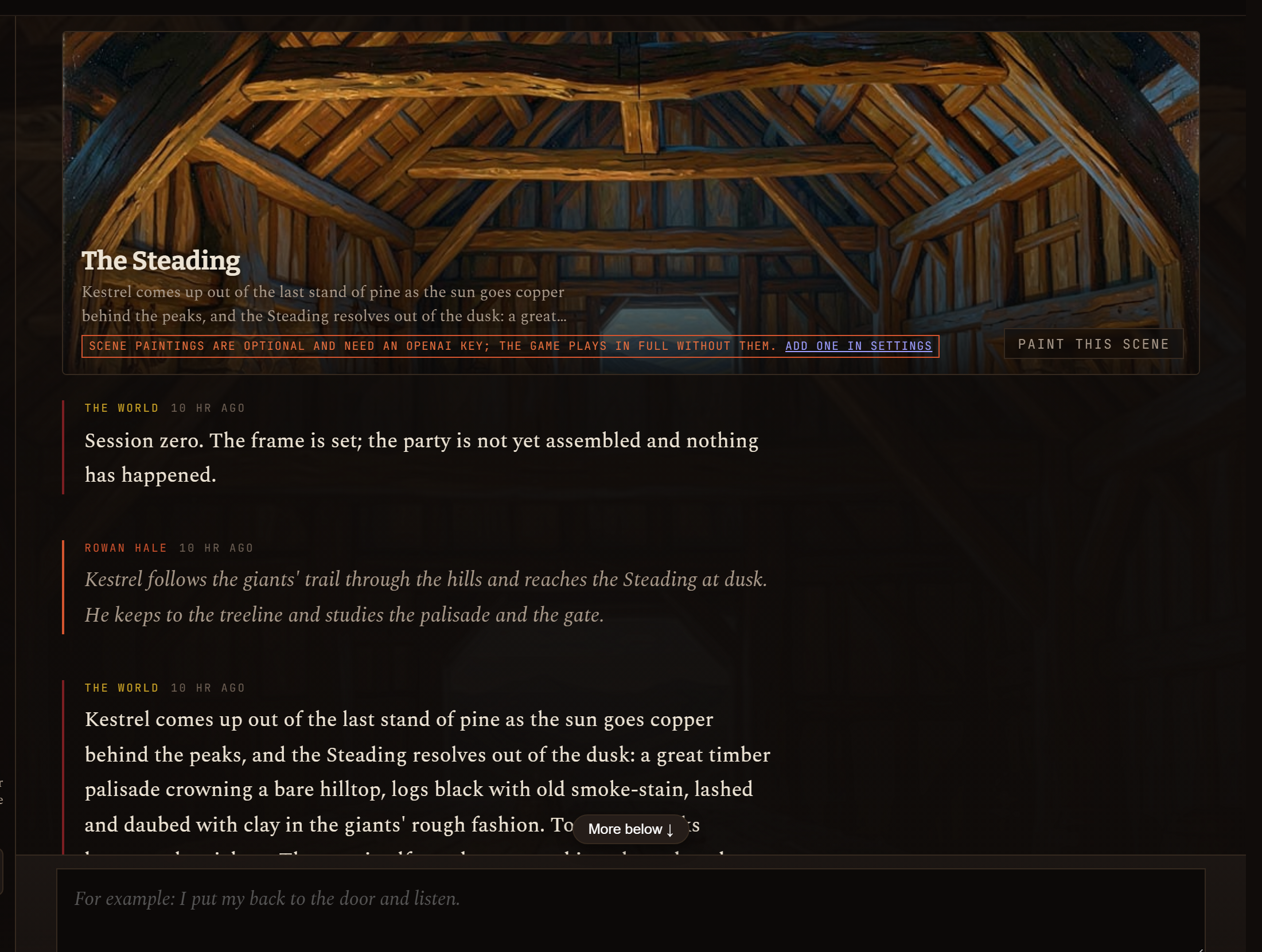
You play by saying what your character does, in plain words. Kestrel follows the giants' trail through the hills and reaches the Steading as the light goes. The Dungeon Master answers:
The bluff
Kestrel does not sneak. He walks up the track with a heavy purse held high and shouts that he is a messenger from the chief's allies, with gold the chief is expecting tonight.
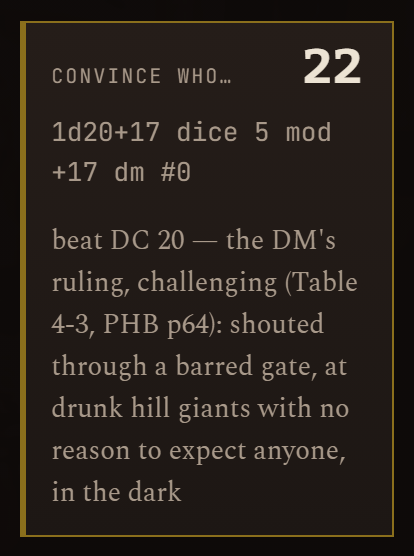
That is a Bluff, and the Dungeon Master calls for it. The engine takes Kestrel's +17 straight off his sheet: twelve ranks and his Charisma. It rolls a 5, for 22 against the DC the Dungeon Master set, 20. The card says where that DC came from: a ruling, placed on the book's own difficulty ladder PHB p64, Table 4-3. The gate grinds open.
Initiative, and a bad first round
Kestrel bows, steps back out as if to fetch a second purse, turns thirty feet out, and the smile is gone. We fight. Roll initiative.
The engine rolls it: 17 and 13 for the giants, 5 for Kestrel. The fight moves onto the battle map, five feet to a square. Each giant fills a ten-foot square and reaches ten feet, and the shading shows how far that is.
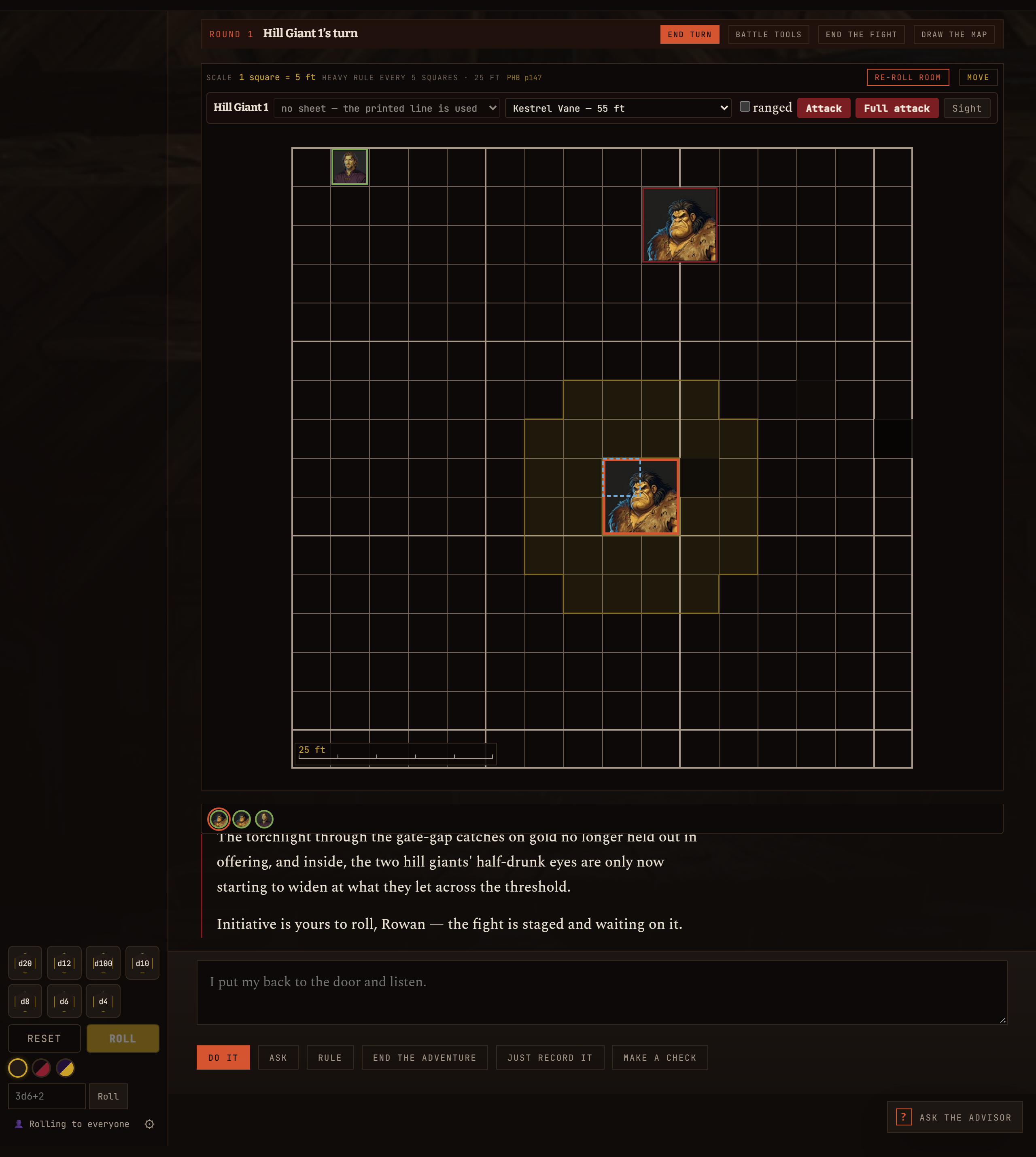
Both giants throw rocks before Kestrel can act. The first rolls a natural 20 and confirms it: 30 points. The second hits for 14. A 64-hit-point sorcerer is at 20 before his first turn.
So he disappears. Greater invisibility goes on from his spellbook, and he is recorded as invisible for nine rounds. From then on, every swing at him rolls a 50% miss chance first PHB p152, Concealment. Two rounds running, both giants lose their turns casting about for someone they cannot see.
Fire from nowhere
A spell is cast from the character's spellbook, aimed at the fight. The panel works out the save DC and shows its parts: 10, plus the spell's level, plus Charisma. It reads the saving throw off the spell's own printed line, and it rolls nine d6 at caster level 9.
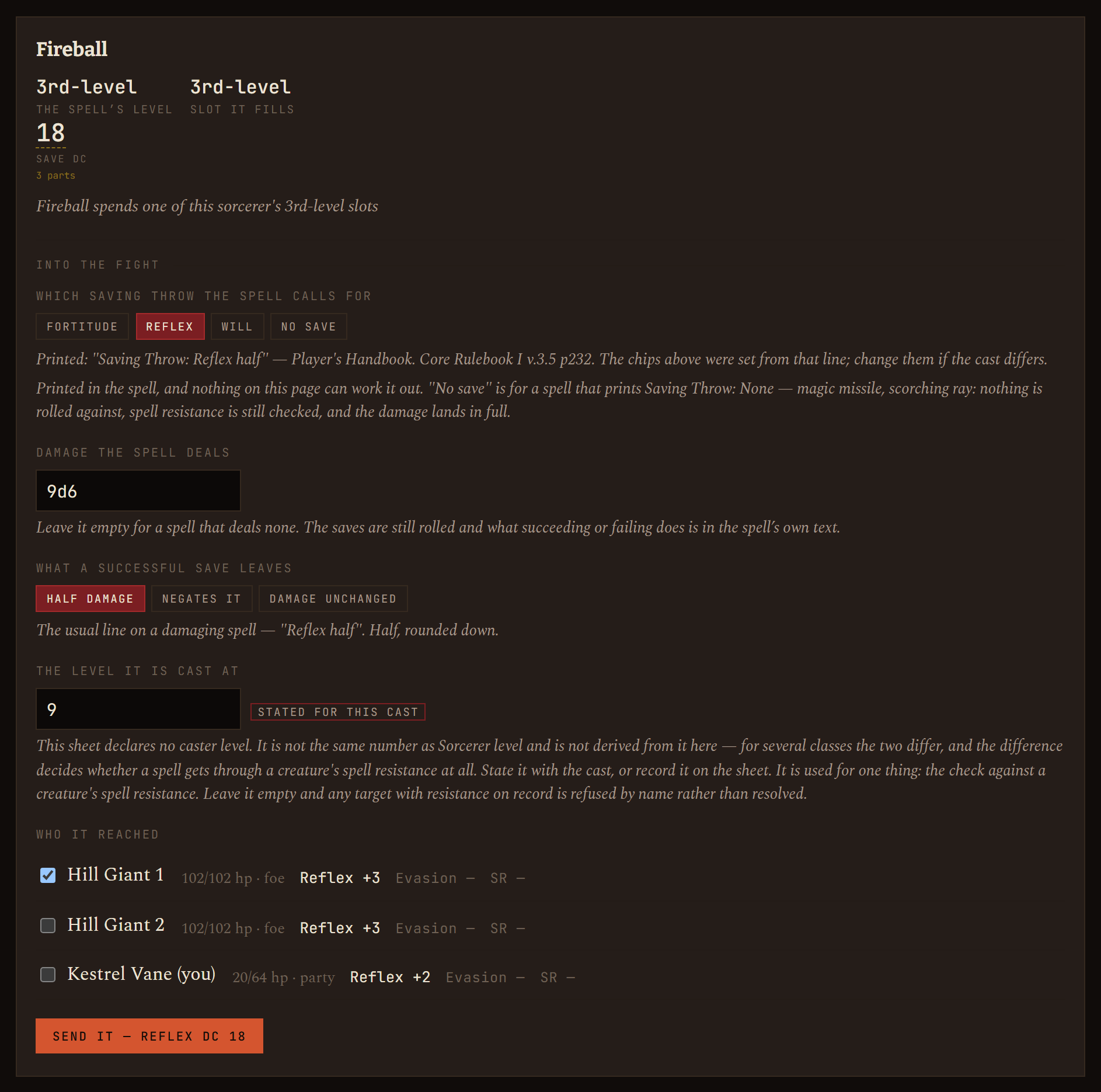
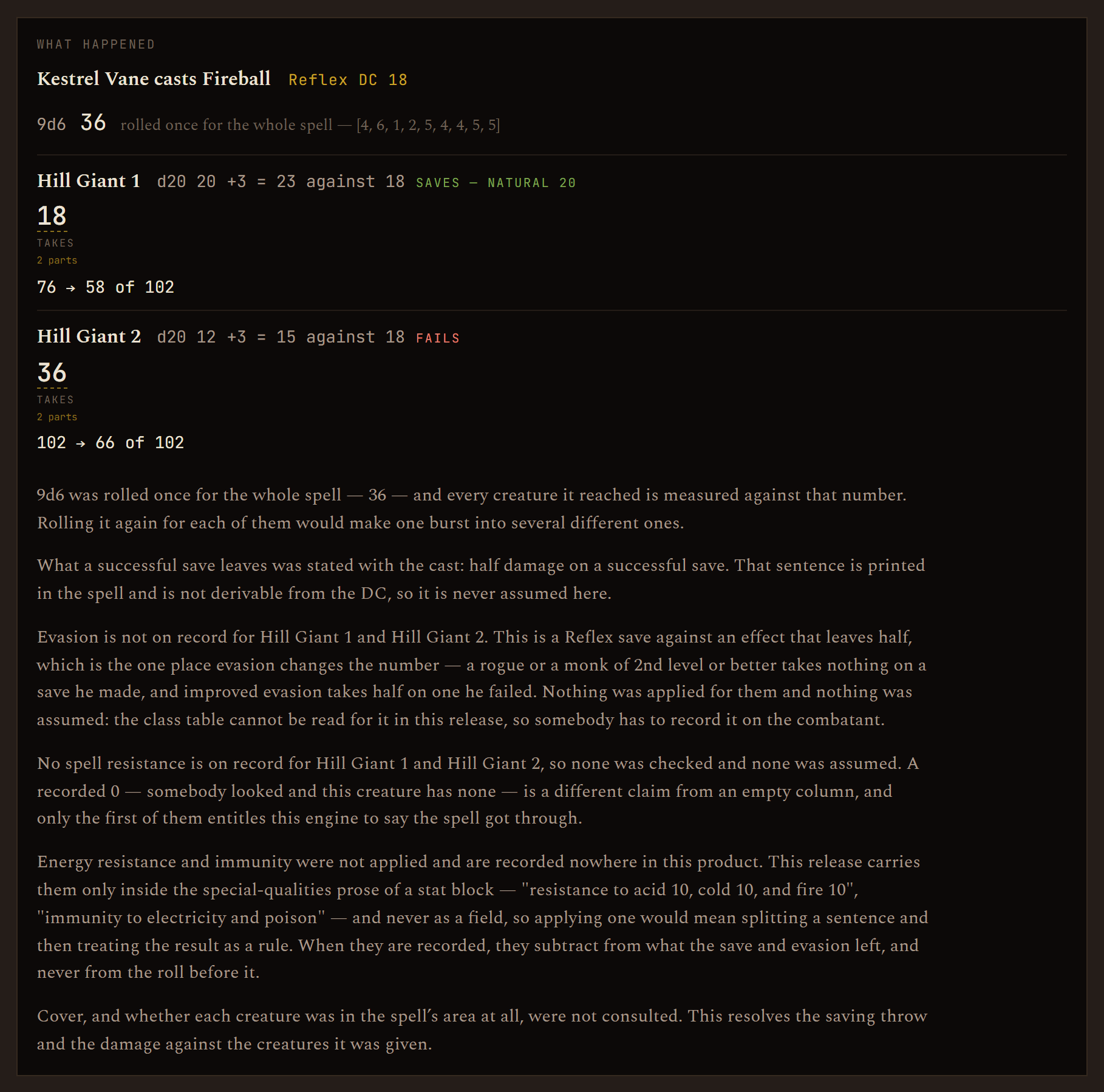
The second Fireball catches both giants. One burst, rolled once: 36. Each giant rolls its own Reflex save against it. The first rolls a natural 20 and takes half; the second fails and takes it all. The hit points come straight off in the fight.
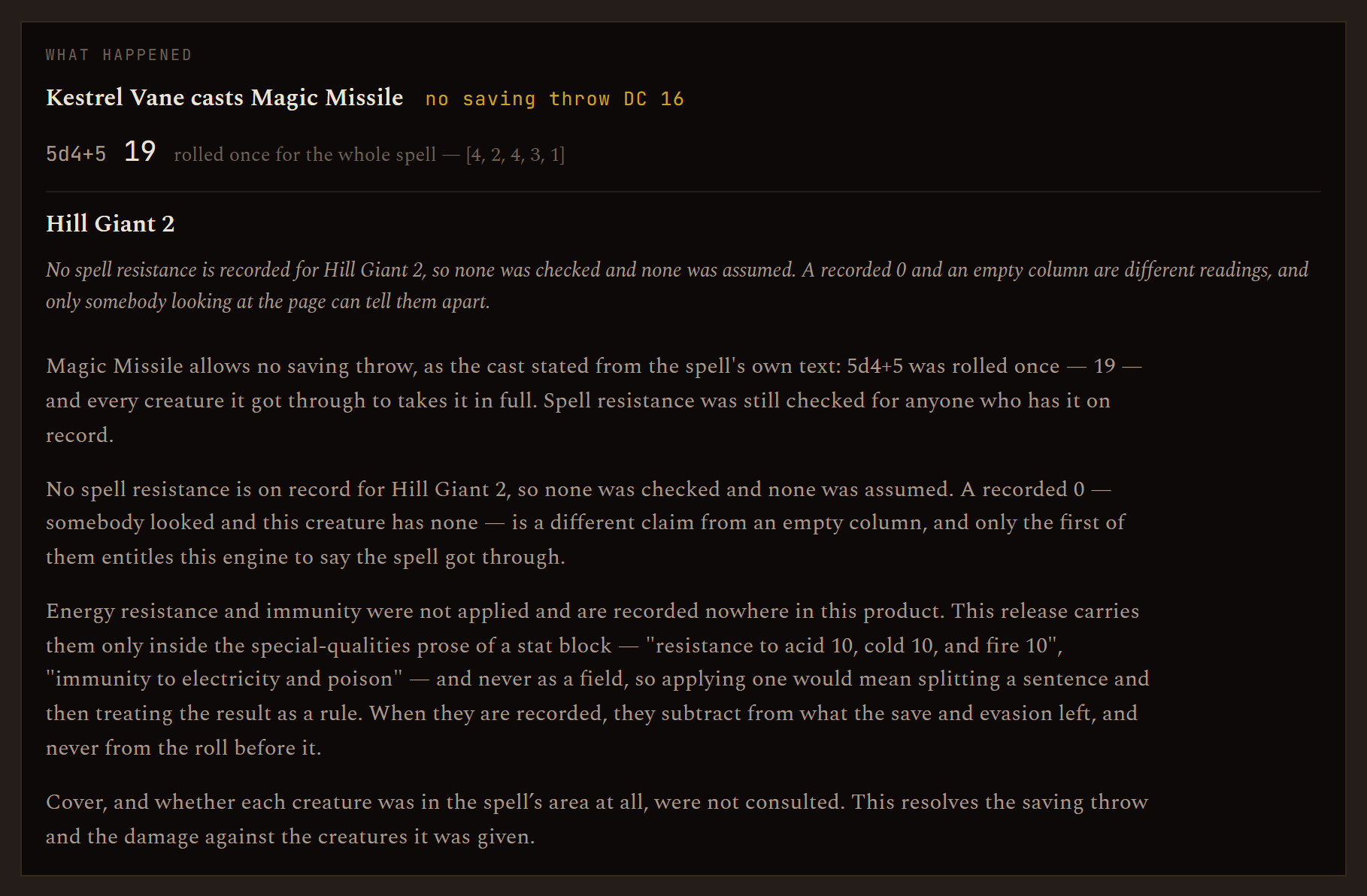
Two more Fireballs, 31 and 30, and the first giant drops, dying. The last one, burned down to 5 hit points, throws a rock blind at the place it last heard him. The miss chance rolls 75 against 50, so the rock is not stopped, and it lands: 11 points. Kestrel is on 9. His answer is five bolts of force that cannot miss, for 19.
Experience, a level, and the coin
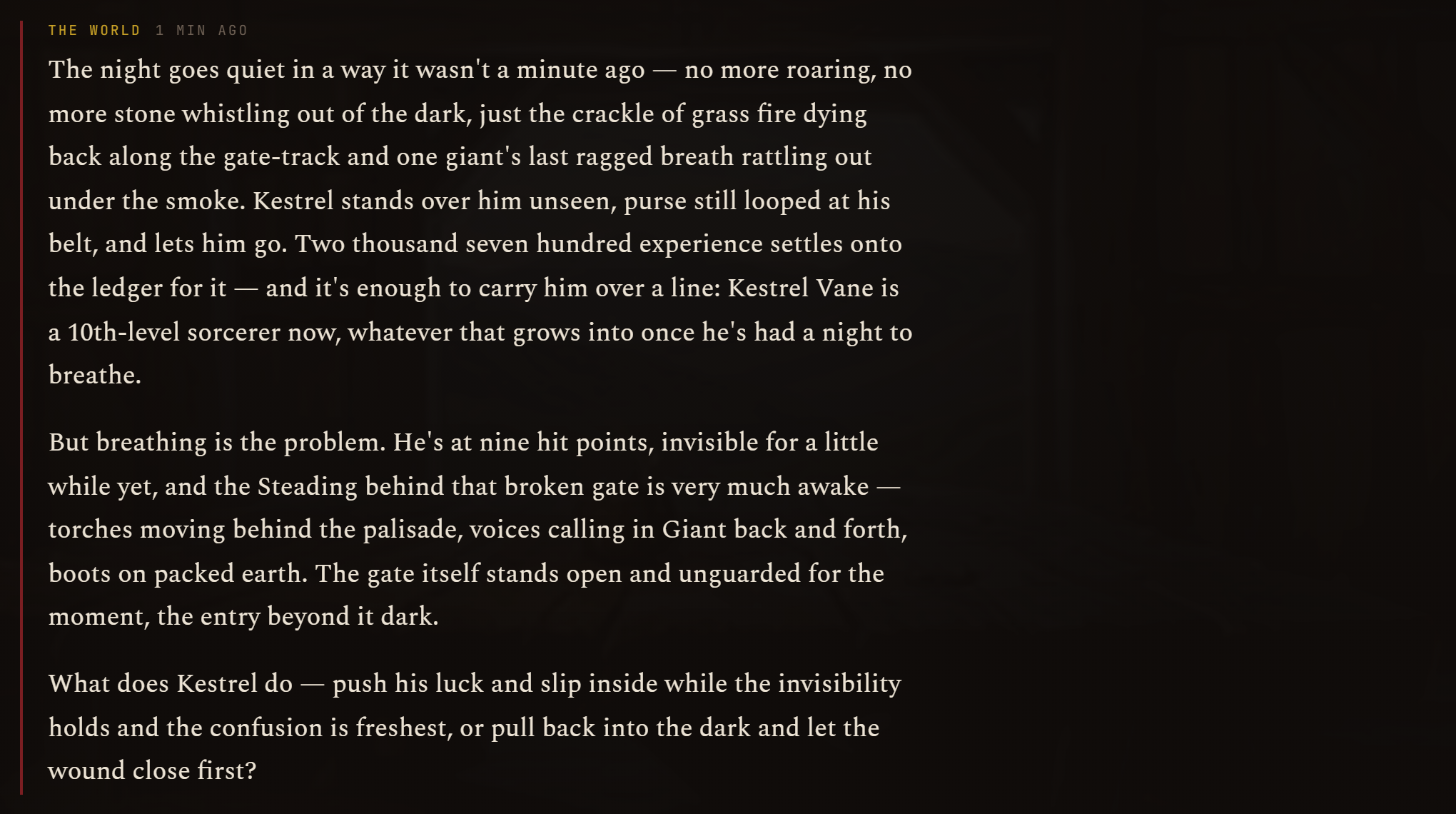
The Dungeon Master closes the fight after six rounds and pays for it: two hill giants, challenge rating 7, against a 9th-level character, 2,700 experience. That takes Kestrel from 43,700 to 46,400, past the 45,000 that 10th level needs.
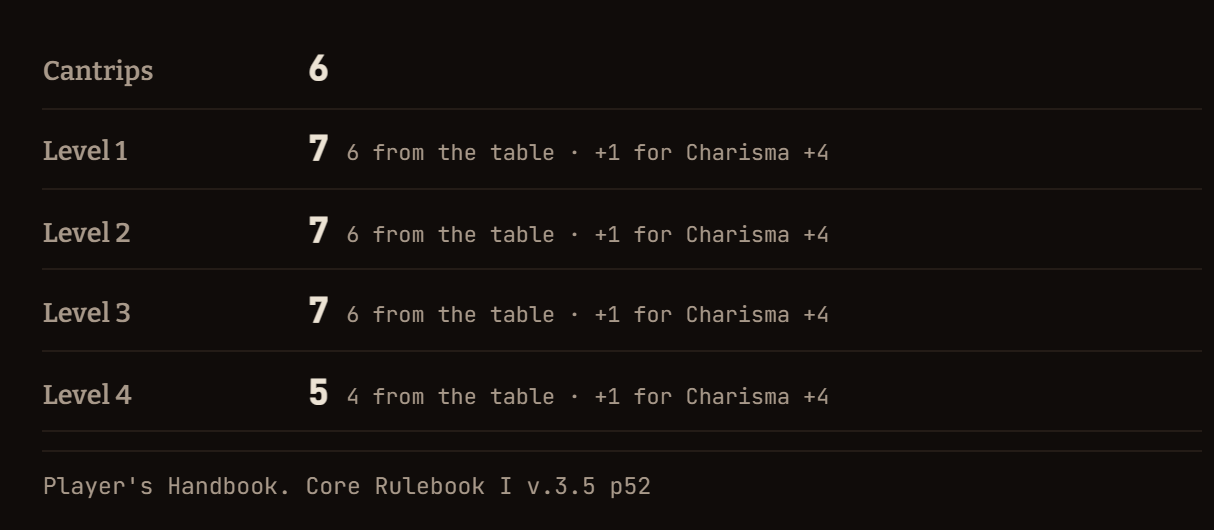
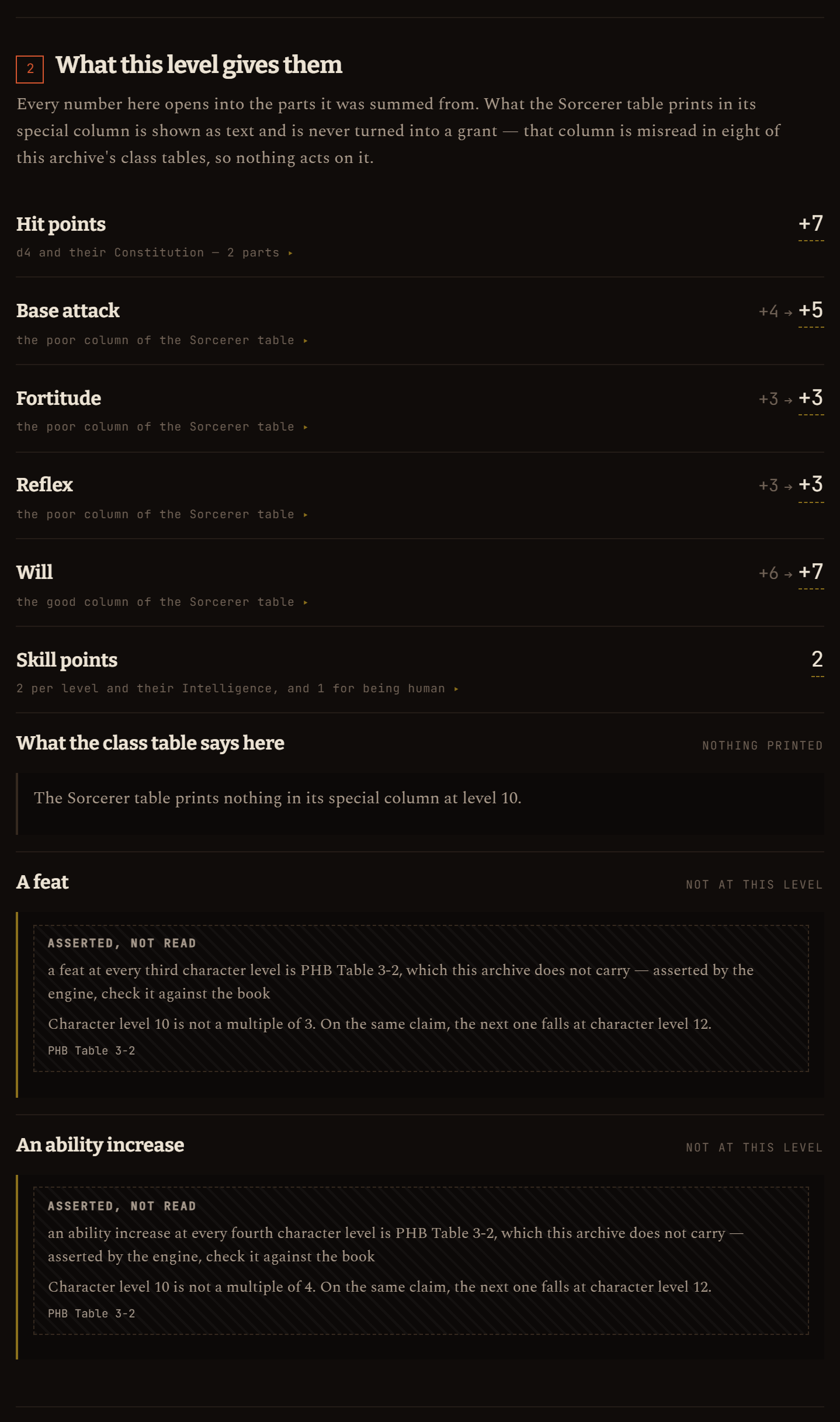
Level them up works out what the level gives before anything is written: hit points, attack and saves off the Sorcerer table PHB p53. It says outright when there is nothing to take, like a feat at a level that does not grant one.
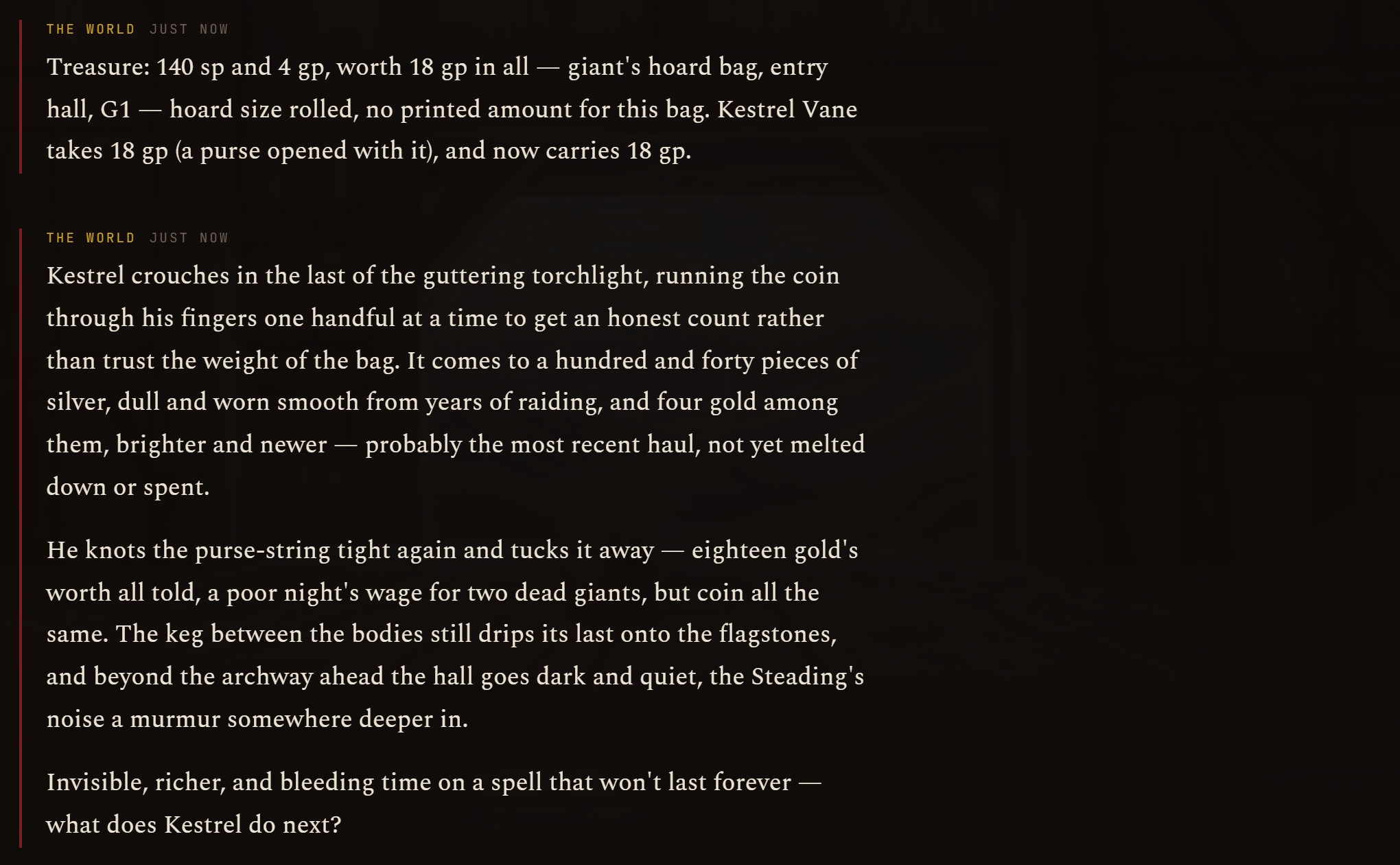
Then the spoils. Kestrel turns out the giants' bags in the entry hall, and one of them clinks. The Dungeon Master rolls how much is in it and counts it into his purse: 140 silver and 4 gold, 18 gold pieces in all. The story says where the number came from. A poor night's wage for two dead giants. At a table of several, the same coin is split evenly among everyone who takes a share.
The journal, and a reload
The Journal keeps everything: every line said, every roll, every fight, every point of experience. Each entry says which record it came from, so any of it can be checked.
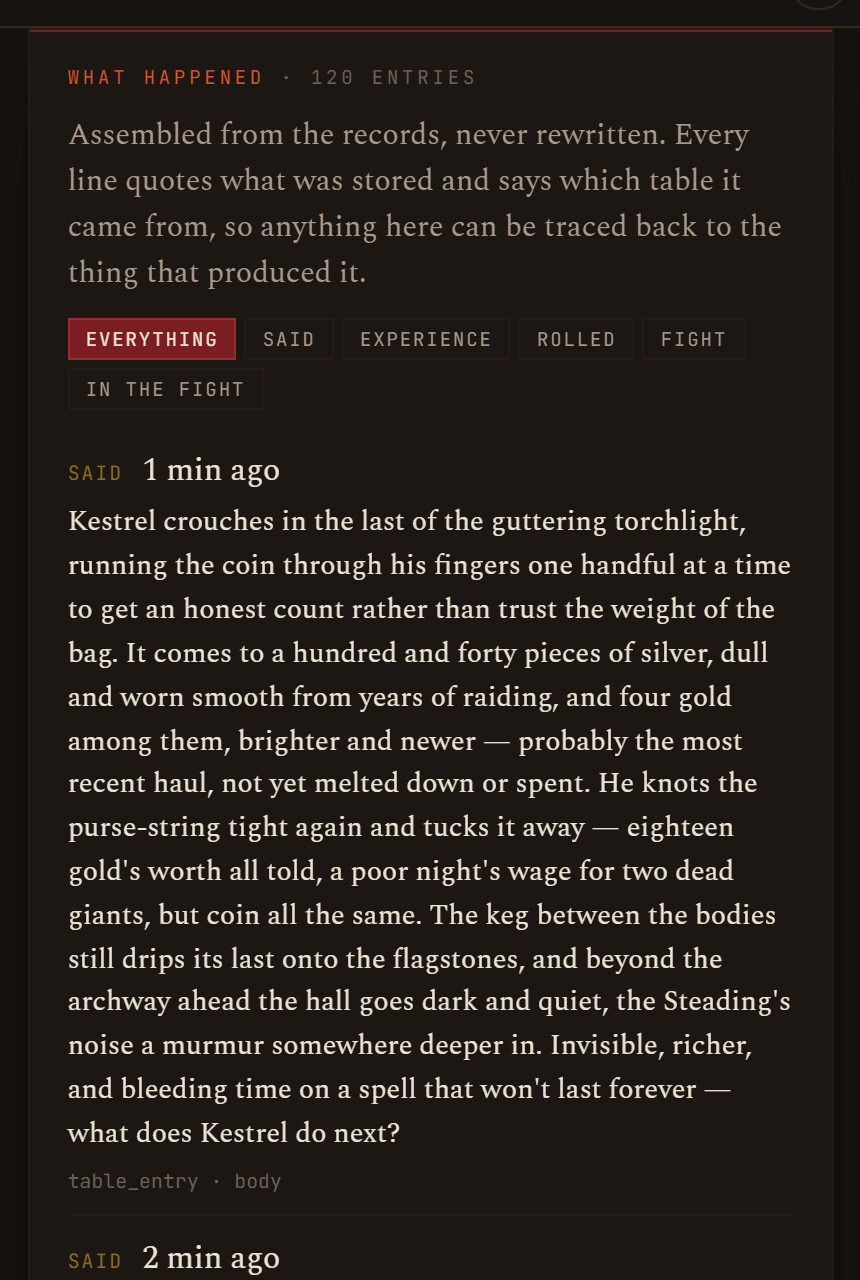
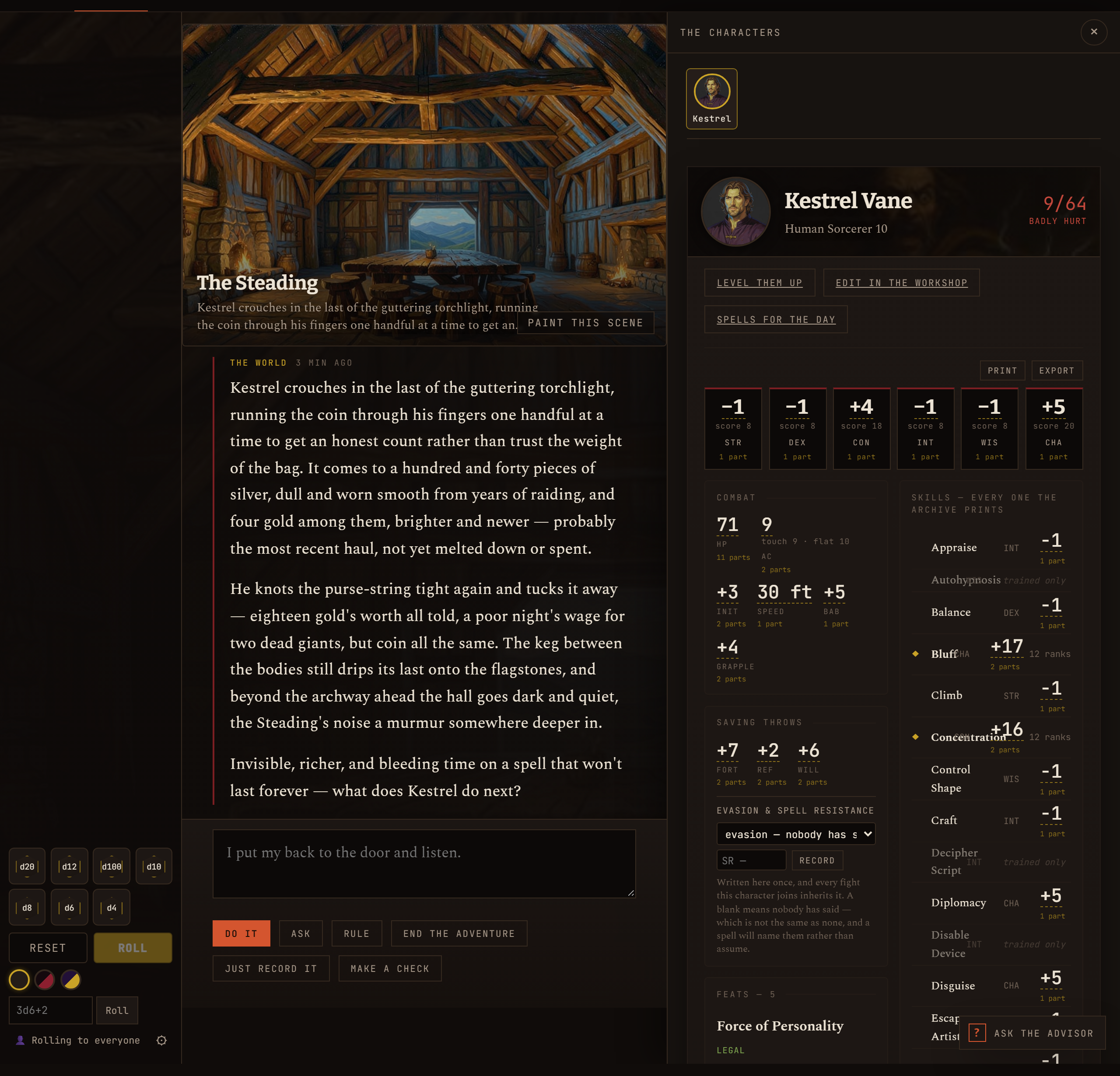
Then close it. For this picture the server itself was stopped and started again before the page was reloaded. Kestrel is a Sorcerer 10, and the story is there word for word.
What these pictures do not show
Said plainly
Where they were taken. Every picture is from a local copy of Realms Unbound, running the released code against a copy of the live rules archive, and signed in as a demonstration account. The Dungeon Master's narration came from the real model.
The fixes they caused. Taking these pictures turned up more than a dozen defects, all fixed and released before this page was written. Among them: a blinded or invisible creature's 50% miss chance was not being rolled; the Dungeon Master rolled a bare d20 for a skill check instead of the sheet's; levelling never read the class table's own row; and found coin had no way into a purse. One trace is left in the pictures: the last one still shows Kestrel's table seat at 64 hit points. His sheet correctly says 71, and a level now reaches the seat as well.
Some rolls were not photographed. The roll cards in the dice rail belong to the page you are on. After a reload, the rolls are still in the journal, but the cards are gone.
The module's random bag table. G1 sends the Dungeon Master to a table of random bag contents that this archive does not hold. It said so, and rolled the coin instead of inventing the book's table.